Recorded live image check
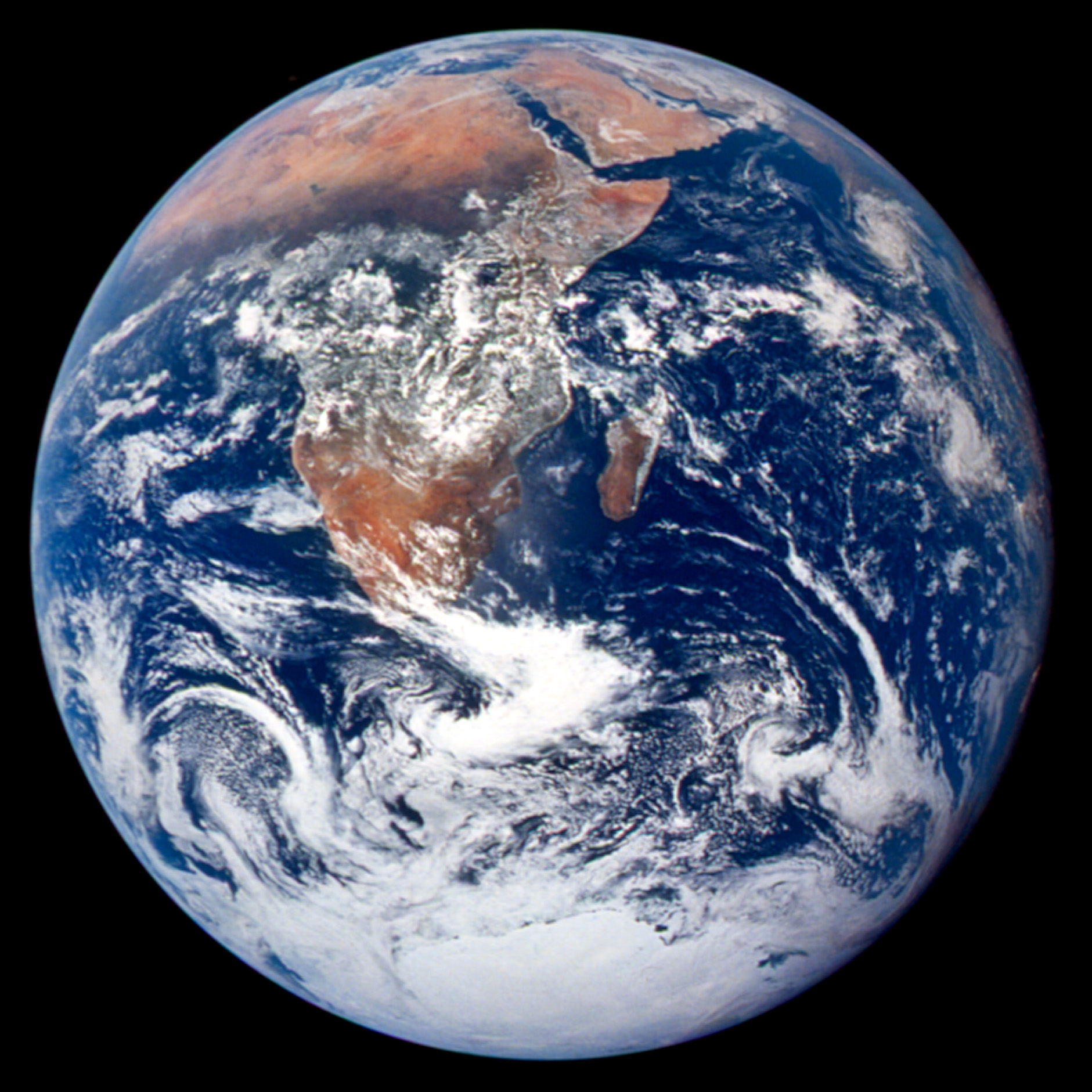
AI image detector test: NASA’s Apollo 17 Blue Marble
The standard check returned a 6.9% AI-generated image signal and “No strong AI finding returned”. The historical source and the detector result are separate pieces of evidence.
Can an AI image detector recognise a real historical photograph?
We submitted one publicly available NASA JPEG to the live DeepfakePolicy image checker. This page records the file, the observed result and how to read it. It is a genuine-photo control, not a comparison of detector accuracy or a test of an AI-generated fake.
Where the photograph came from
NASA identifies this as Apollo 17 photograph AS17-148-22727, taken on 7 December 1972. Its Earth Observatory page credits NASA Johnson Space Center and provides the JPEG used here. That attribution supports a historical photographic source; it does not certify every later digital reproduction as an untouched camera original.
NASA source page and attribution
Exact file and test procedure
We downloaded the page’s JPEG, kept its bytes unchanged and submitted it as AS17-148-22727_lrg.jpg. The standard image check used 1 existing credit. Public-source research was not selected, and the optional model-research contribution remained unchecked. No edited, resized, screenshot or generated variant was submitted.
This is a web JPEG reproduction of a film-era photograph, not the original film or a camera RAW file. Our exact download is preserved below; the upstream download may change. The recorded PDF confirms the same file hash. Resizing or recompressing it would produce a different input.
- Checked at (UTC)
- 2026-10-02T07:50:51.663Z
- Source file
- AS17-148-22727_lrg.jpg
- Format / dimensions
- JPEG · 1881 × 1881 px
- File size
- 743,020 bytes
- Report ID
- db48d771-36fc-4cf8-927d-6fc6eeb97c8d
- Submitted file SHA-256
83a4a11f58dc1ef12162b009c7601704f01eb96bd235a491b420265f3684998e- Exported PDF SHA-256
64b26ec6fa6a52e2a1928b460483e18987f0e288d2d50bca23f6d6e82ae02458
What the live report actually returned
| Report field | Observed result | Meaning in this case |
|---|---|---|
| AI-generated image | 6.9% · Not detected | A low detector signal, shown as “Not detected”; not a 93.1% guarantee of authenticity. |
| Deepfake face manipulation | 0% · Not detected | Shown as “Not detected”. No human face appears in this image, so this does not test face-swap detection. |
| Overall report conclusion | No strong AI finding returned No strong AI finding returned | No strong AI finding for this submitted JPEG; not a certificate that the image or its caption is true. |
The PDF records provenance as limited and public web evidence as not available. We established the NASA attribution separately for this article. The standard check did not automatically find or authenticate that source. Its visual observations are automated review, not an independent human forensic examination.
How to interpret 6.9% without overclaiming
The low signal is consistent with the attributed historical photograph. It does not establish a calibrated probability that the image is real, and a percentage should not be inverted into certainty. The report’s “human” image category concerns origin classification; it does not mean the image contains a person. A genuine photograph can also be used with a false caption or in the wrong context.
Use the same workflow on a suspicious image
- Keep the exact file and record its SHA-256 before comparing results.
- Find the earliest attributable publication and compare the image, caption and date. Keep source evidence separate from the model score.
- Read coverage and unavailable checks in the report. For a material claim, obtain corroborating evidence before deciding.
Inspect the recorded evidence
The original English PDF was exported from the live account report. It contains this public NASA file’s findings, with no account credentials or customer material. This published copy does not make the account’s stored report public. The JSON is an editorial transcription of observed fields, not the raw provider API response. Hashes identify the preserved artifacts, not their truth.
What this example cannot show
One genuine-source image cannot measure sensitivity to generated images, false-positive rates, face manipulation performance or video accuracy. There is no generated counterpart, representative dataset or repeated-run study here. This is not the public benchmark and does not validate the product-reported 98.8% figure. The report does not expose a detector model version; future checks may return different signals.